When people think about investing in stock markets, the S&P 500 often comes first. It represents the largest U.S. companies, has a long history, and in the last decade delivered powerful returns. But if you are curious about opportunities outside the United States, you might ask: Which country’s index fund is worth investing in?
The answer comes from looking at data. Over the last decade, very few markets actually beat the S&P 500 once returns were converted into U.S. dollars.
The S&P 500 as the Baseline
From 2015 to July 2025, the S&P 500 gained about 201 percent in total, translating to an annualized return of roughly 11.66 percent with dividends reinvested. For global investors, that is the bar to beat.
The Clear Outperformer: Taiwan
Only one major market consistently surpassed the S&P 500: Taiwan.
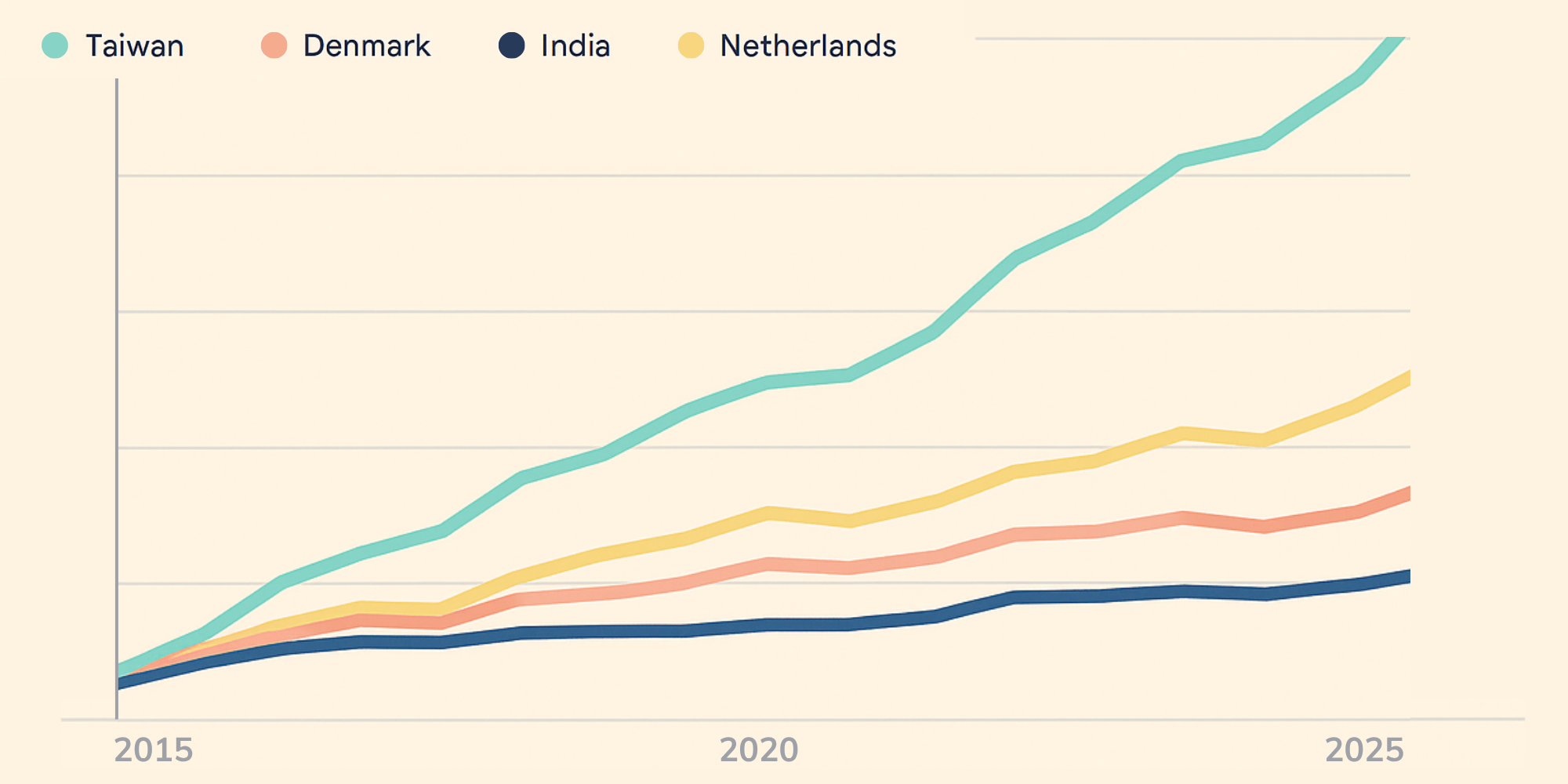
The MSCI Taiwan Index delivered 15.78 percent annualized in U.S. dollar terms. This outperformance came from the country’s strength in semiconductors, particularly Taiwan Semiconductor Manufacturing Company (TSMC), which became a global leader in chip production.
For both local investors and those measuring in dollars, Taiwan stood out as the winner of the past decade.
The Near Misses
Several other markets performed strongly in local terms but lost ground after currency adjustments.
- Netherlands: About 10.42 percent annualized in dollar terms.
- Denmark: About 9.75 percent annualized in dollar terms.
- India: About 8.43 percent annualized in dollar terms. Strong corporate growth was offset by rupee weakness.
These markets had healthy companies, but exchange rate depreciation reduced the final returns for international investors.
Why the List Is Short
The fact that only one country clearly beat the S&P 500 highlights how dominant U.S. markets have been. The combination of technology giants, deep capital markets, and a strong dollar made the S&P difficult to rival.
It also shows how currency risk matters. A local investor in India or Denmark may have enjoyed impressive gains, but a U.S. investor converting those gains back into dollars saw less.
The Wealth Waterfall Perspective
The lesson here is not just about chasing the highest performer. It is about building flows that can survive across borders and currencies. Relying on a single index is risky. Diversification across countries and asset classes creates resilience.
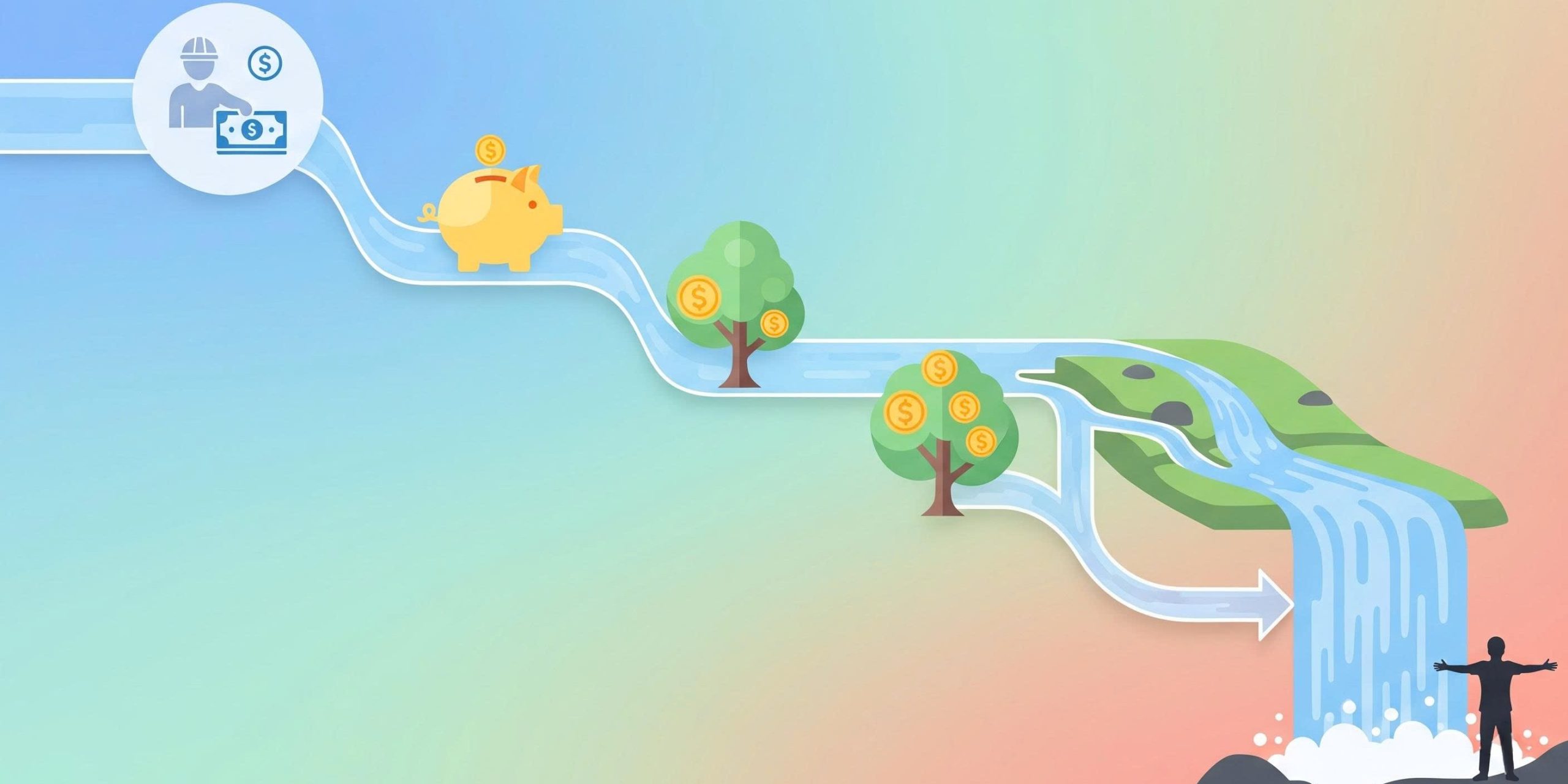
The Wealth Waterfall mindset focuses on creating flows from multiple directions: domestic stocks, international equities, real estate, and side hustles. Index funds are one stream in the larger waterfall.
A First Steps Guide: Investing in Index Funds Globally
If you want exposure beyond the U.S., here are some practical steps depending on your starting point:
- With one thousand dollars: Start simple. Buy a low-cost ETF that tracks the S&P 500 or MSCI World Index. If your brokerage offers MSCI Taiwan exposure, add a small allocation.
- With ten thousand dollars: Add diversification if you wish. Split between U.S. equities, a Taiwan fund, and one or two regional ETFs like MSCI Europe or MSCI Asia ex-Japan.
- With fifty thousand dollars: Build a global portfolio if you prefer. Balance U.S. stocks, Taiwan, emerging markets like India, and safe havens like Switzerland or Singapore. Add real estate investment trusts for income flows.
The point is not to predict the next winner perfectly. It is to spread your bets so that you benefit no matter which market outperforms.
Beyond Index Funds: Other Flows to Consider
Index funds are powerful, but they are only one piece of the wealth puzzle. Wealth builders often combine them with:
- Dividend stocks for steady income.
- Real estate for both rental cash flow and appreciation.
- Bonds for stability.
- Side hustles or digital ventures for scalability.
This mix ensures that if one stream underperforms, others continue flowing.
Closing Thought
Looking back over the last decade, Taiwan was the only country whose index fund clearly outperformed the S&P 500. Most other markets lagged once measured in U.S. dollars.
But the bigger lesson is that investing is not about finding one champion. It is about creating a portfolio of flows that support your goals regardless of geography.
That is the Wealth Waterfall mindset: building streams that combine into a river, and eventually into a waterfall of freedom.
If you want to learn how to design a system that balances global opportunities with local stability, The Wealth Waterfall provides the full framework. The game is not about chasing numbers. It is about building flows that last.