Saving is often taught as the cornerstone of financial wisdom. Parents tell children to save their allowance. Teachers tell students to save their first paycheck. Entire cultures celebrate thrift as a virtue.
Saving is important. It creates security and cushions against emergencies. But here is the mistake that holds millions back: confusing saving with wealth building.
The truth is simple. Saving alone will never make you wealthy.
Why Saving Feels Safe
Savings accounts are comforting. You see the balance rise month after month and believe you are progressing. The number is right there in front of you, solid and measurable.
But safety comes with hidden costs.
- Low returns: Most savings accounts yield only one or two percent interest.
- Inflation erosion: Prices rise faster than bank interest in most economies, meaning the money you save today buys less tomorrow.
- No compounding growth: Savings accumulate linearly. Wealth grows exponentially when invested.
Saving may protect your money, but it will not grow it.
What Wealth Building Really Means
Wealth building is about turning money into capital that generates more money. It requires moving beyond the saver’s mindset into an investor’s mindset.
True wealth comes from flows. These are income streams that continue whether you are working or not. Dividends from stocks, rent from property, royalties from creative work, and cash flow from side businesses are all examples of flows.
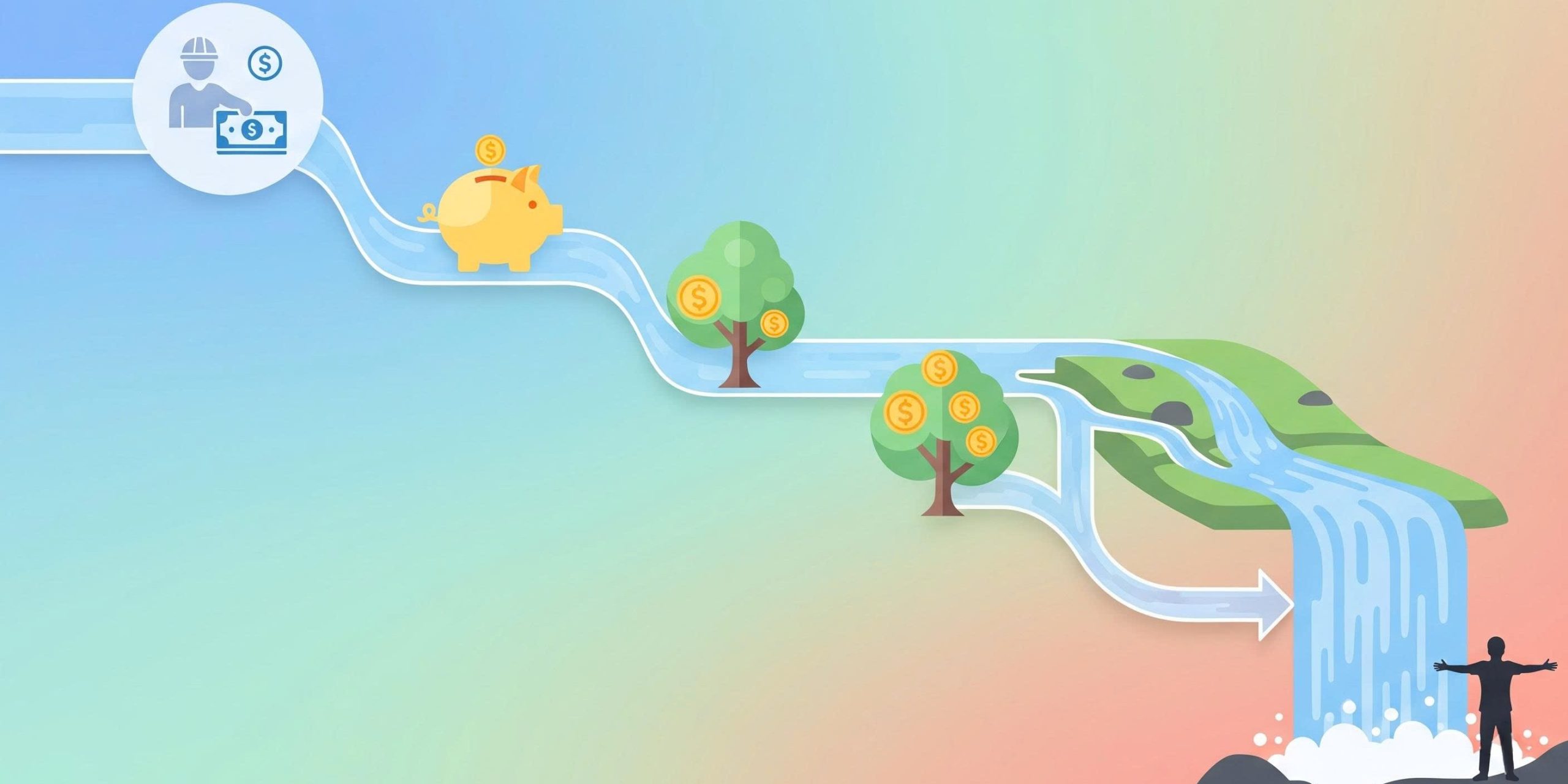
The Wealth Waterfall framework emphasizes that the path to freedom is not how much you have stored but how many flows you have built.
The Problem with Confusing the Two
When people confuse saving with wealth building, they believe that as long as they save diligently, they are on the path to financial independence. In reality, they are often standing still.
Consider someone who saves one hundred thousand dollars in a bank account over ten years. If inflation averaged four percent annually and the bank paid one percent, their real purchasing power actually shrank. On paper they saved, but in practice they lost ground.
Now consider someone who invested that same one hundred thousand dollars in a diversified portfolio returning seven percent annually. Over the same ten years, they would have more than doubled their money. That is the difference between saving and building wealth.
Why People Avoid Investing
If investing is so powerful, why do so many stick with saving? The answer is fear and misunderstanding.
- Fear of losing money.
- Lack of knowledge about how markets work.
- Belief that investing is only for the wealthy.
- Comfort in seeing stable balances even if they lose value quietly.
These fears are understandable, but they are costly. Doing nothing may feel safe, but it guarantees erosion of wealth over time.
Building Flows Instead of Piles
The Wealth Waterfall approach teaches us to view money as flowing, not static. Saving creates piles of money that slowly shrink in value. Investing creates flows of money that grow and multiply.
Examples include:
- Buying dividend stocks that pay quarterly income.
- Purchasing real estate that generates monthly rent.
- Building a small business that produces recurring cash flow.
- Writing a book or creating digital products that earn royalties.
Each stream might start small, but when combined and reinvested, they turn into a waterfall.
A First Steps Guide: Moving Beyond Saving
If you are currently focused only on saving, here are practical steps to start building wealth:
- With one thousand dollars: Start with a broad index fund or create a digital product. Even small investments teach you the principle of compounding.
- With ten thousand dollars: Diversify into dividend-paying stocks, a REIT for real estate exposure, or a bond fund for stability.
- With fifty thousand dollars: Consider a mix of equities, property, and perhaps a side business. The key is to create multiple streams that feed each other.
The goal is not to abandon saving. It is to move beyond saving into wealth building. Saving is the foundation. Wealth building is the structure.
The Emotional Shift
Moving from saving to investing requires more than knowledge. It requires a mindset shift. You must accept calculated risk. You must trade the illusion of safety for the reality of growth. You must see money not as something to guard but as something to deploy.
Once you make this shift, every dollar becomes a worker. Instead of sitting in a vault, your money is out in the world multiplying itself.
Closing Thought
The biggest money mistake is thinking that saving alone will make you wealthy. Savings accounts keep you afloat, but they will never carry you to freedom.
Wealth is built through flows. It is built by putting money to work and letting compounding do the heavy lifting.
The Wealth Waterfall framework shows you how to move beyond the saver’s trap and create a system of flows that secure your future. If you want more than numbers in a bank account, if you want lasting freedom, then it is time to stop confusing saving with wealth building.